In the Korean cosmetics industry, a raw material is never just a raw material. It is a story, and stories, more than formulations, are what brands use to win consumers.
For the past decade, Korean beauty brands have built their identities around narrative: the rarity of an ingredient, the heritage of a region, the precise science behind a benefit. In this context, France has a structural advantage. No country in the world has a richer vocabulary of certified, traceable, geographically-specific botanicals, yet very few of them have been positioned for the Korean market.
This journal documents three of the most compelling: Rose centifolia de Grasse, Safran du Quercy, and Jasmin de Grasse. All three are sourced from specific French territories with centuries of documented cultivation history. All three carry cosmetic properties that align directly with K-beauty’s current priorities. And all three are, at this moment, largely absent from Korean cosmetic pipelines.
That is the opportunity.
Rose centifolia de Grasse
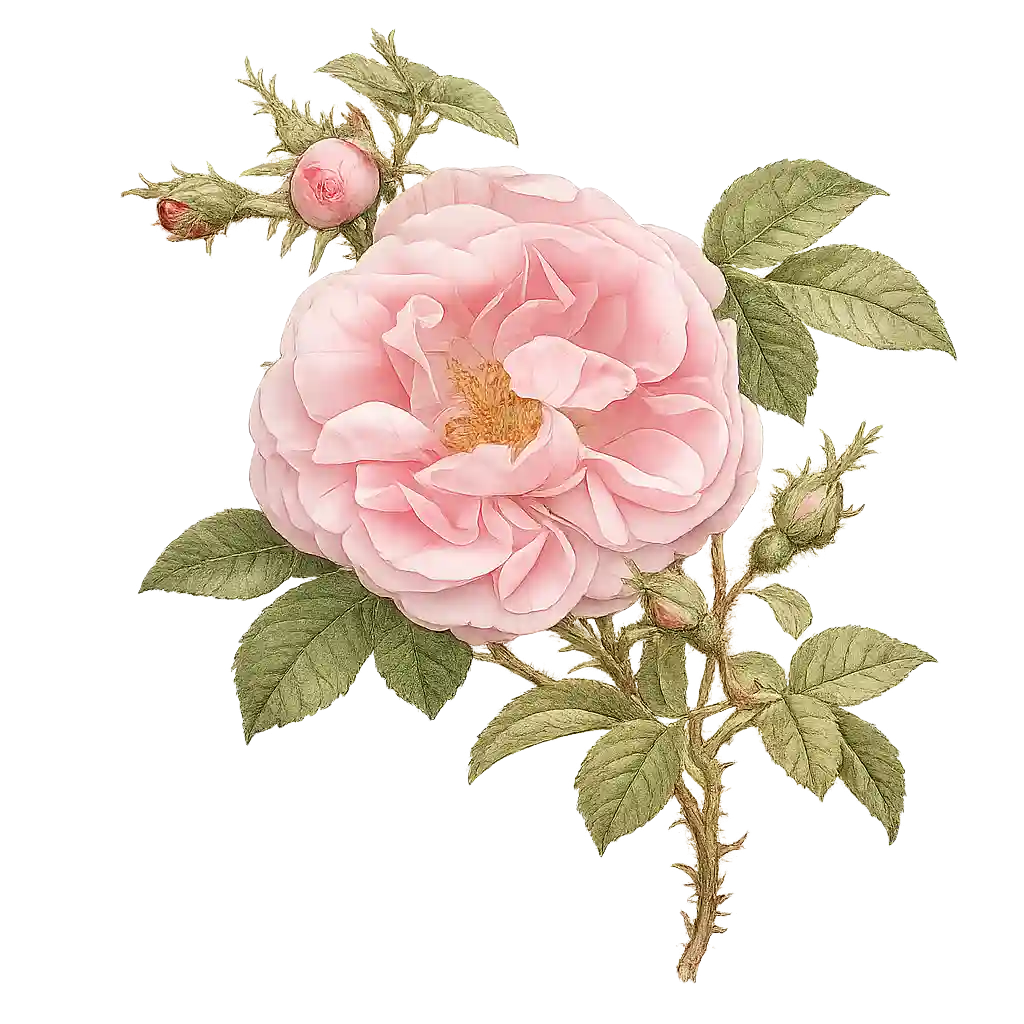
The centifolia rose, known locally as the rose de mai, has been cultivated in the hills above Grasse since the sixteenth century. It is the rose that Chanel has sourced from the same family of growers for over a century. It is the rose that Dior built an agricultural estate around. It flowers for exactly three to four weeks each spring, harvested by hand before dawn, and its yield is exceptional in its scarcity: a single kilogram of absolute requires approximately five tonnes of fresh petals.
For cosmetics, the hydrosol (rose water produced through steam distillation of fresh petals) is the most immediately applicable form. It is a gentle, pH-balanced aqueous product with documented soothing and mildly astringent properties. In Korea, where cosmetic formulations routinely replace base water with functional hydrosols as a storytelling layer, the Grasse rose water carries an immediate advantage: it has a name that Korean consumers already associate with the highest tier of French perfumery.
“Five tonnes of fresh petals, harvested before dawn during a three-week window each spring, to produce a single kilogram of absolute. Scarcity is not a constraint: it is the story.”
Safran du Quercy
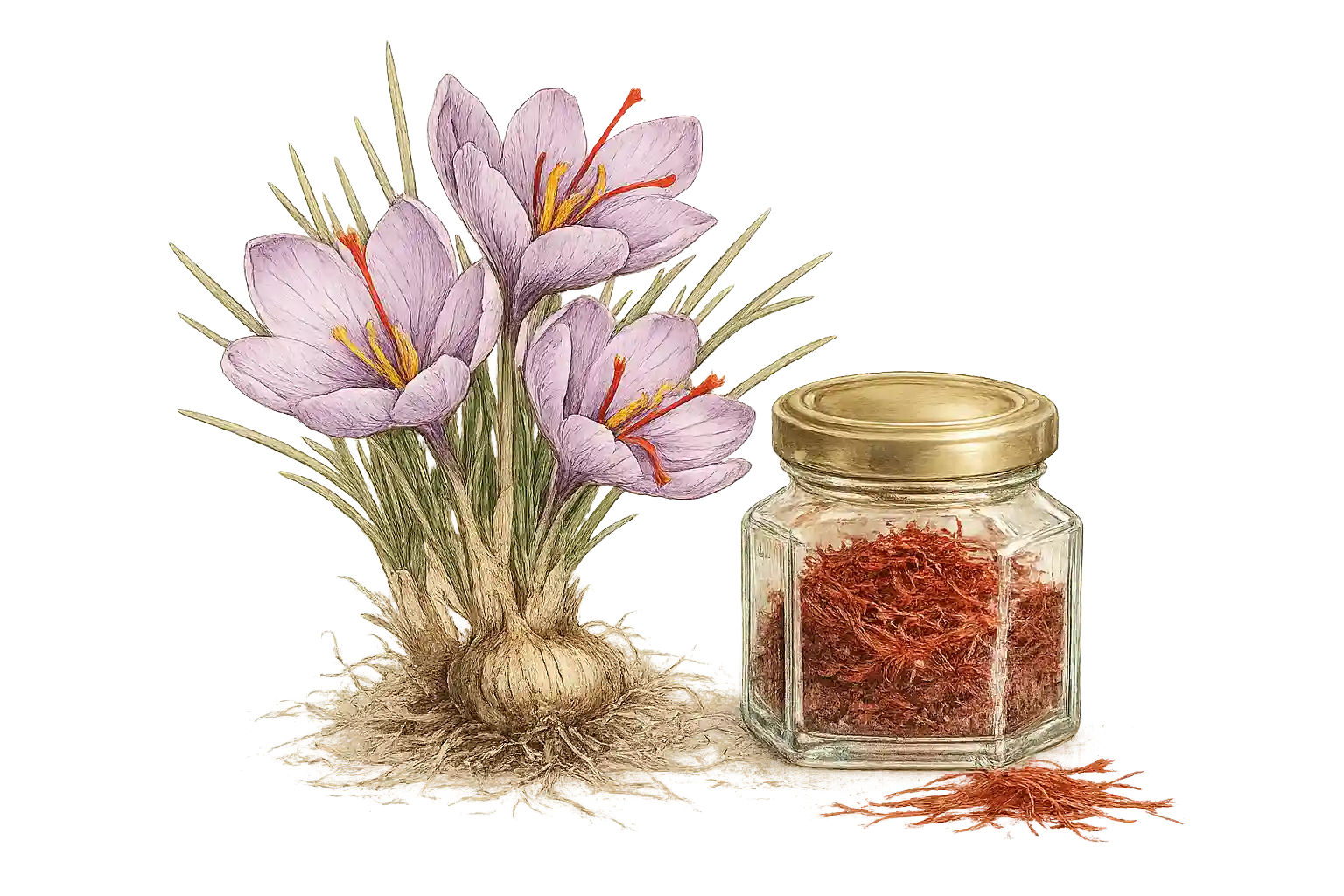
French saffron from the Quercy region has been cultivated since the medieval period, on the limestone causses of the Lot department, a terrain of extraordinary agricultural character that produces one of the world’s most carefully protected saffron crops. Strict production rules govern every stage: cultivation of Crocus sativus, hand-harvesting of the flowers, and the manual extraction of exactly three stigmas per blossom. Nothing is mechanised. Nothing can be.
One gram of Safran du Quercy requires the stigmas of approximately 200 flowers. One kilogram requires 200,000. These are not marketing figures: they are certified agricultural facts, and in the Korean cosmetic market, where the rarity of an ingredient functions as a primary pricing and positioning lever, they translate directly into brand value.
From a cosmetic science perspective, saffron extract contains crocin, safranal, and picrocrocin: compounds studied for their antioxidant and skin-brightening properties. Brightening is among the highest-demand cosmetic functions in the Korean market. The alignment between storytelling and documented efficacy makes Safran du Quercy an unusually coherent proposition for Korean clients: rare, certified, traceable, visually dramatic, and functionally relevant.
“Brightening is among the highest-demand cosmetic functions in Korea. Saffron delivers it, backed by a specific territory and a visual identity that no synthetic active can replicate.”
Jasmin de Grasse
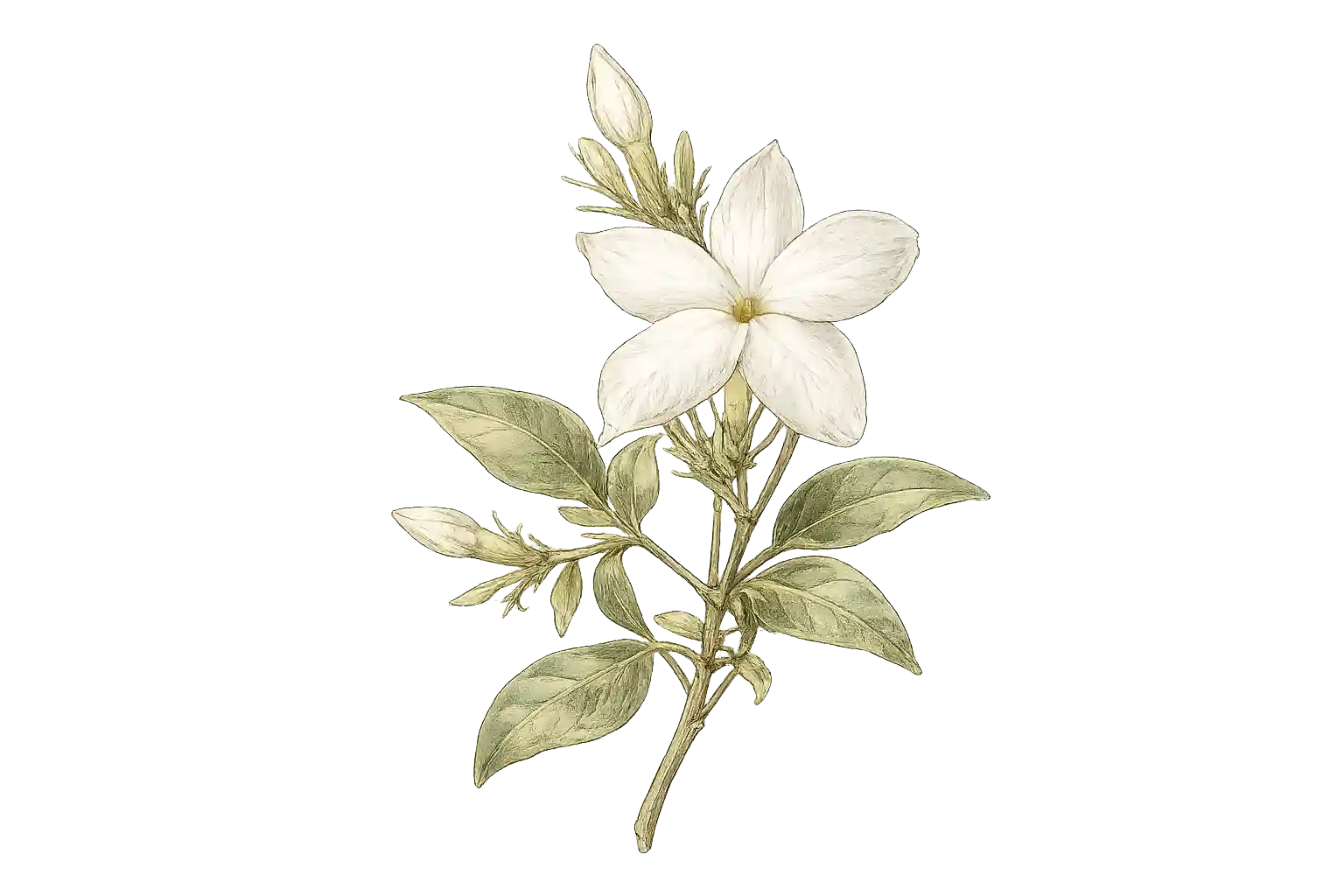
Alongside the centifolia rose, Jasmin de Grasse is one of the two botanical anchors of the Grasse valley’s floral agriculture. The variety cultivated here, Jasminum grandiflorum, is distinct from common jasmine in both complexity and perishability. Flowers must be picked by hand within hours of opening, before heat begins to degrade their aromatic compounds. A skilled harvester collects between six and eight kilograms of blossoms in a day. The flowers do not wait.
The cosmetic applications operate on two registers simultaneously: the scientific and the sensory. Jasmine extract has documented skin-soothing and moisturising properties, and its absolute (extracted through enfleurage or solvent extraction) is among the most expensive natural raw materials per kilogram in the world. But it is the sensory dimension that matters most for Korean brand positioning: jasmine carries a universal familiarity and a luxury connotation that requires no translation.
Framing jasmine alongside rose under a single “Grasse origin” concept creates a coherent brand territory for Korean clients. Rather than two unrelated ingredients, it becomes one provenance (the perfume capital of the world) with two complementary expressions. This is how ingredient sourcing becomes brand architecture.
“One provenance, two expressions. Grasse has given the world its vocabulary for luxury scent for four centuries. That is not a detail: it is the entire marketing brief.”
The three ingredients documented here share more than a geography. They share a structure: a specific origin, a certified designation, a cosmetic function that maps to a Korean market need, and a visual and narrative dimension that brands can use immediately. That structure is what NB Origins looks for when building a sourcing proposition.
For Korean cosmetic manufacturers evaluating a European ingredient strategy, the question is not whether French botanicals have value. The question is whether the right ones can be identified, qualified, and reliably supplied, with the documentation and the story already in place. That is the work we do.